
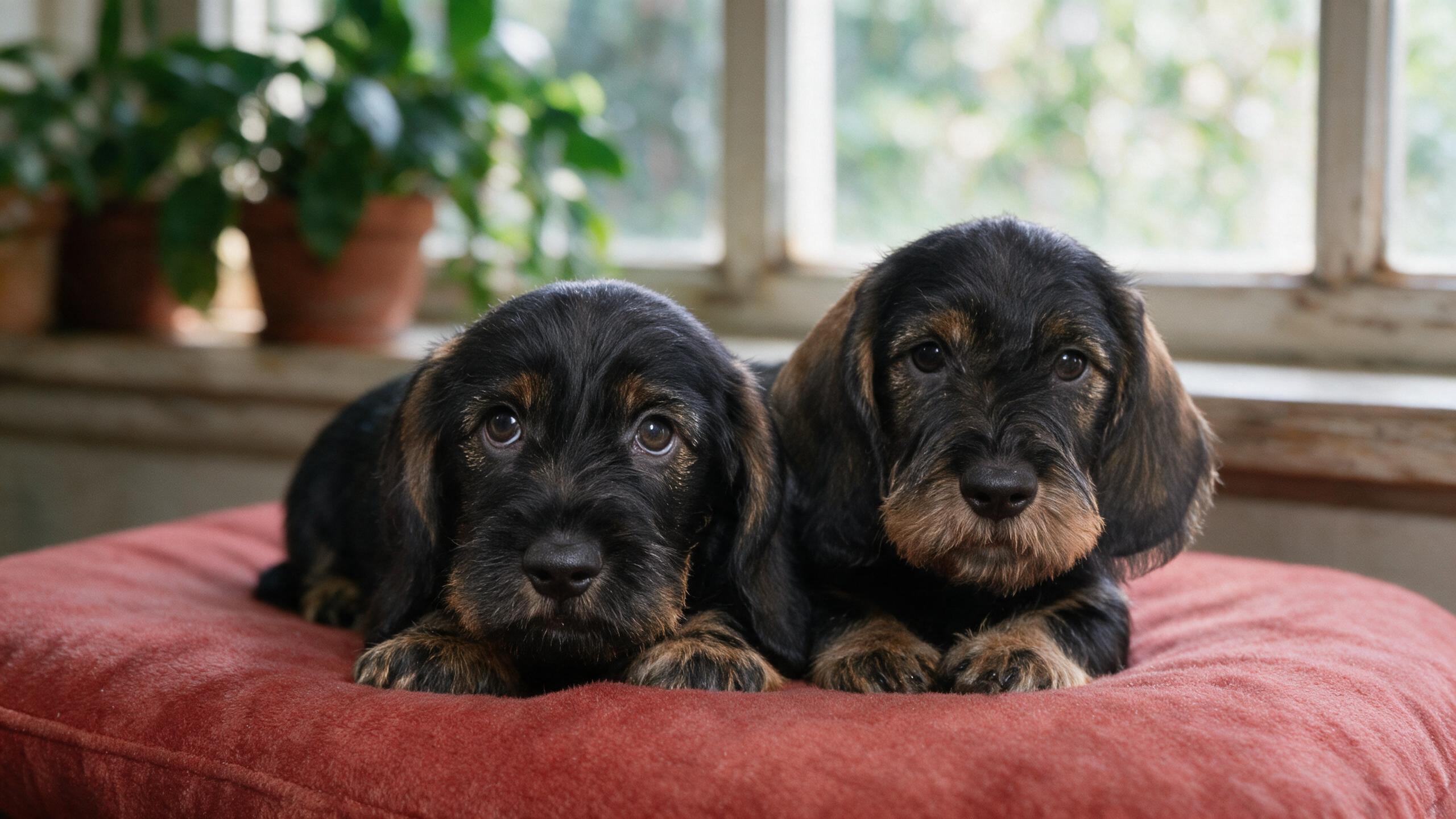
A puppy changes a house less than the shopping list suggests. Most of what the first weeks ask for is not equipment; it is arrangement — where the puppy will sleep, where it will eat, which door leads to the grass, who gets up at night. Families tend to over-buy and under-prepare. This page is for the second part.
A house read at floor level
Before anything arrives in a box, walk the rooms the puppy will live in and look low. Cables behind the television, cleaning products behind a door that closes, the gap behind the bookcase that looks too small — this breed was selected to go into narrow places, and a puppy will test yours. Outside, walk the fence line slowly. A gap that stops most dogs does not stop a digger.
Stairs deserve a plan of their own. Dachshund Health UK notes that young puppies — up to twelve months — are at more risk of hurting themselves on stairs and furniture, and that the sudden shock of jumping down puts extra stress on the spine. So, for the first months, a simple habit: the puppy is carried up and down, and a gate does the remembering for you. There is more on the back, and on how we select for it, in A long life, by design.
Equipment that earns its place
None of it needs a logo. A bed with a washable cover, placed in the room where the family actually lives — not the quietest room, the most inhabited one. A pen or a crate left open and arranged as a den: the veterinary behaviour advice is that a crate, introduced well, should serve as comfort, a place of rest rather than punishment. Two bowls. A light collar and lead for the first outings. A few things that may be chewed, so that fewer things that may not be are. And where the sofa is part of daily life, a ramp beside it earns its keep — jumping down is the movement the spine advice warns about, not climbing up.
Buy the rest after you have met the dog. Preferences arrive with the puppy.
The first nights
The first nights are a negotiation, and the puppy opens high. It has just left its mother, its litter and every smell it knows; some crying is not a crisis. Keep the sleeping place near you at first — beside the bed, not across the house — and keep the nights boring: a quiet word, a carry outside, back to bed. What the puppy learns in that week is not obedience. It is that night comes, someone is there, and morning follows.
Questions families ask
What do we actually need before the puppy comes home? Less than the shop suggests. A bed, an open crate or pen, two bowls, a lead, safe things to chew, a gate for the stairs. We talk the list through with every family before the handover.
Where should the puppy sleep on the first night? Near you, at first. We would rather a family add distance in week three than try to subtract fear from week one.
When does socialization start? Before you meet. It begins here — the dogs are part of the family’s every day — and it continues with you. The veterinary behaviour bodies place the most receptive window in the first three months of life.
Early days in the world
The American Veterinary Society of Animal Behavior puts the primary socialization period in the first three months of life, and holds that this work should begin before the vaccination course is complete — puppy classes from around seven to eight weeks of age, with at least one set of vaccines and a first deworming at least seven days beforehand. The practical reading for this breed: gentle breadth, early. New floors, new sounds, calm visitors, short car rides. A wirehaired dachshund tends to be reserved with strangers, and wide, unhurried early experience is what keeps that reserve from hardening into suspicion. Nothing needs to be dramatic. Frequency beats intensity.
From the house
The house’s old breed page said it without decoration: these dogs were selected for work underground, and the character came with the selection — decided, a little stubborn, protective of its own people, reserved with people it does not know. Early socialization matters for exactly that reason. It also warned the other way: a Wanhelsing needs chances to explore, dig and run, and a dog treated only as something to cuddle tends toward weight problems and too much guarding. The family’s book adds a smaller truth, useful by October: for all that coat, ours do not love the cold. A warm corner out of the draughts belongs on the list.
The handover
A puppy here is never simply sold. It is entrusted — with care and responsibility on both sides. When the day comes, the puppy travels with a kit prepared by the house and with advice that fits that particular dog, and the conversation does not end at the gate. How the entrustment works — and where it begins — is described in L’affidamento.
The house is ready when it is calm. The rest, the puppy teaches you.